
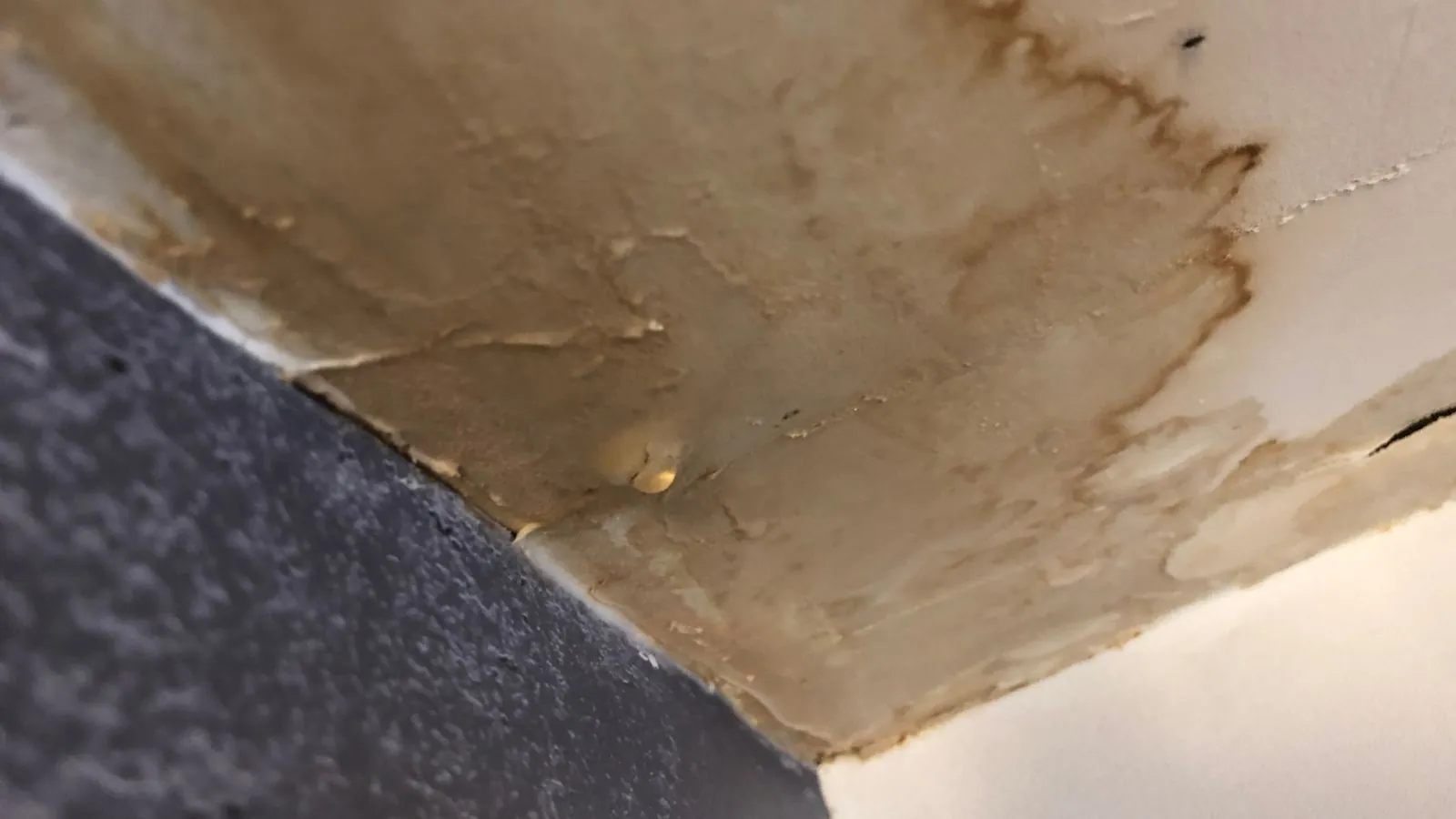
AC leak water damage in Stoughton shows up as a stain on the ceiling below an air handler, a wet closet floor or a damp wall near the unit. Call us to plan a visit. Turn the system off to stop more water from forming, set a bucket under any drip, and photograph the stain.
Condensate leaks are usually slow, which gives them time to soak insulation and framing.
How air conditioners leak
Cooling coils pull moisture from the air and send it down a drain line. When algae clogs the line or the pan rusts through, water backs up and overflows. Attic air handlers are the worst place for this, because the water lands directly on ceiling drywall below.
Frozen coils, low refrigerant and dirty filters can also cause overflow when the ice melts.
What an AC leak looks like
Most signs show up near the air handler.
Stains below the unit
Brown rings on the ceiling beneath an attic air handler are the classic sign.
Standing water in the pan
A pan that stays full means the drain is clogged.
Musty odor from vents
Damp insulation and moist ducts produce odors.
Water near the outdoor unit
Pooling at the condenser pad can point to drainage trouble.
How we dry an AC leak
The work focuses on insulation, drywall and framing.
Shut off and trace
The system is turned off and the water path is traced.
Remove wet material
Soaked insulation and saturated drywall are removed.
Dry the cavity
Dehumidifiers and air movers run until readings are normal.
Recheck for mold risk
Surfaces are inspected before closing up so damp spots do not stay hidden.
Fix the drain, add a safeguard or replace the pan
HVAC choices belong to your technician. These are common options.
| Option | What it does | Trade-off |
|---|---|---|
| Clear the condensate line | Stops the immediate overflow | May need repeating if algae returns |
| Install a float switch | Shuts the unit off when water rises | Needs a technician and wiring |
| Replace the drain pan | Fixes a rusted or cracked pan | Higher cost, long-term |
| Add a secondary drain | Provides a backup path | Requires access and planning |
Wet ceilings from AC overflow often need ceiling repair after drying.
What drives the price
Size of the affected area, insulation replacement, ceiling texture and drying time shape the price. We explain the scope and price before work starts.
Insurance basics:
- Sudden overflow is sometimes covered
- Slow leaks from poor maintenance often are not
- Document the date you first noticed the stain
Ask your HVAC technician for a written note on the cause.
Stain under the air handler?
Call the dispatch line and we will plan a visit.
Mistakes That Make AC Leaks Worse
Running the system until the stain appears is the main one. Pouring bleach down the condensate line is another, since it can corrode fittings. Skipping the filter change is a third, because a clogged filter can freeze the coil and overload the pan when it melts.
Ask your HVAC technician what caused the overflow, and keep the note for your insurer.
What to Do Before We Arrive
These steps limit damage while you wait for a visit.
- Turn the air conditioner off at the thermostat
- Place a bucket under any drip and photograph the stain
- Move furniture and rugs out from under wet ceilings
- Do not press on a sagging ceiling or poke at it
Standards and Sources Behind This Page
The ANSI/IICRC S500 standard for professional water damage restoration classifies water by contamination category and by how much a material absorbs. Condensate water is generally treated as clean at the start, but it can pick up contaminants from dirty pans and coils, so drying should begin quickly.
AC leak cleanup in the Stoughton area
Summer humidity keeps air conditioners running hard across Stoughton, and attic air handlers are one common setup. We serve the whole town and nearby areas including Avon and Holbrook.
If mold has started, see mold remediation. Dried framing completes the job through structural drying.
AC Leak Water Damage questions answered
It can be. If the ceiling is sagging or water is running steadily, call right away. A slow drip can wait for a scheduled visit, but turn the unit off.
Not if it is leaking. More running means more water. Turn it off until a technician fixes the cause.
It can if insulation and drywall stay damp. Fast drying lowers the risk.
Sometimes, when the loss is sudden. Slow or maintenance related leaks are often excluded.
An HVAC technician. We handle the water damage left behind.
Yes. We check ceiling, insulation and framing for moisture and tell you what the readings mean. Same-day visits depend on the schedule.