
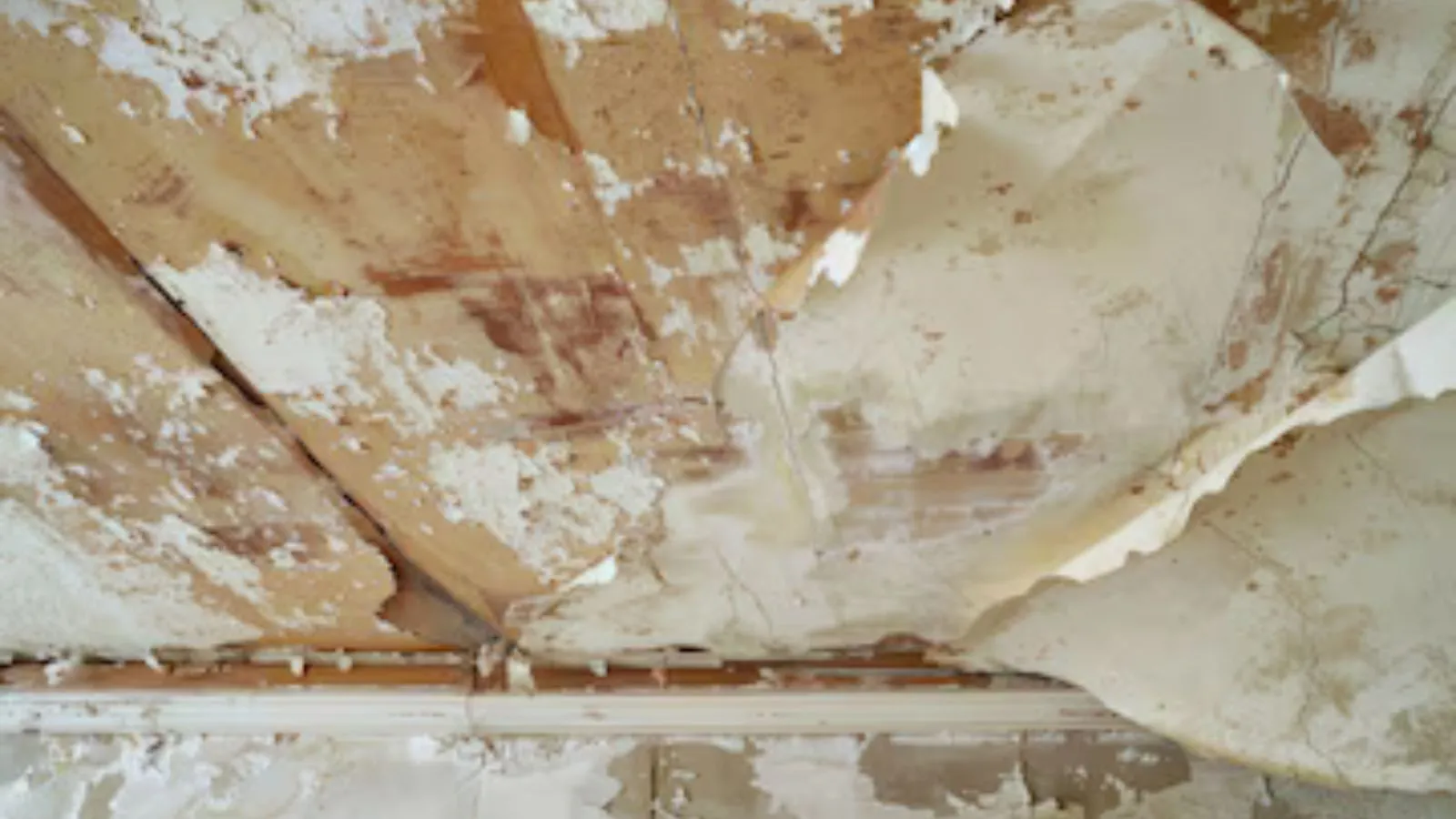
A sagging ceiling is holding water, and ceiling water damage repair in Stoughton starts by releasing that water safely. Call the 24/7 line before the drywall lets go. Move people and furniture out from under the bulge, put a bucket beneath it, and switch off lights or fixtures in that area at the breaker if you can reach it safely.
Do not poke the bulge with a broom. That can bring down a lot of wet drywall at once.
A bulging ceiling can fall without warning
Wet drywall is heavy, and a single bulge can hold gallons. The ceiling is also a path for electrical wiring, so water and fixtures are a bad mix.
Right now:
- Keep everyone out from under the sagging area
- Shut off the water supply if a pipe above is the cause
- Place a bucket under the lowest point
- Photograph the ceiling before anything is opened
Where ceiling leaks start
The water you see is rarely directly above the stain. It travels along joists and pipes before dripping. Typical sources include a bathroom above with a failed supply line or tub seal, a roof leak or ice dam in winter, an air handler condensate line, or a heating pipe in the attic.
Winter ice dams are a recurring cause in New England, and snow weight damage is generally treated differently by insurers than a gradual roof leak.
Signs of a ceiling water problem
Look up when anything on this list appears.
Brown or yellow stains
Staining rings show repeated wetting over time.
Peeling or bubbling paint
Moisture behind paint lifts it from the drywall.
A visible sag
This is the urgent one, since water is pooled above.
Drips during rain
A leak that follows weather points to the roof or exterior.
How we repair a water damaged ceiling
We release, trace, dry, then hand off for finishing.
Release the water
A small controlled opening lets trapped water drain into a container.
Find the source
Moisture meters and thermal imaging trace water to its origin.
Dry the cavity
Air movers and dehumidifiers dry joists and insulation.
Prep for repair
Damaged drywall is removed so repair can begin on dry framing.
Patch, replace a section or redo the ceiling
The right repair depends on how much drywall absorbed water.
| Condition | Likely repair | Reason |
|---|---|---|
| Small stain, no sag | Dry, prime and repaint | Surface staining only |
| Sagging section | Cut out and replace | Drywall loses strength when saturated |
| Wet insulation above | Remove and replace | Insulation stays damp and feeds mold |
| Textured ceiling with repeated leaks | Larger section replacement | Patches are hard to match and leaks may recur |
A burst supply line above often means broader damage. Read burst pipe water damage for the full picture.
What affects ceiling repair cost
Price depends on the size of the affected ceiling, whether insulation must be replaced, how much drying is needed and the ceiling texture. Finish painting and carpentry are separate from the water work. You hear the scope and price before work starts.
Insurance in brief:
- Sudden leaks from plumbing are often covered
- Ice dam and snow weight damage is generally covered under Massachusetts homeowners policies
- Long-term seepage and maintenance failures often are not
File promptly and keep a record of when you first noticed the stain.
Ceiling sagging or dripping?
Call now and a dispatcher will help you stay safe until the crew arrives.
Standards and Sources Behind This Page
According to the Massachusetts Division of Insurance, ice dam and snow weight damage is generally covered under homeowners policies, while gradual seepage often is not. The ANSI/IICRC S500 standard for professional water damage restoration is the usual reference for drying drywall and insulation once the water source is stopped.
Ceiling leaks in Stoughton homes
Colder winters bring ice dams and attic condensation to Stoughton roofs, and roof leaks near chimneys and valleys are a common source. We cover the whole town and nearby areas such as Holbrook and Brockton.
If the drywall itself needs attention beyond the ceiling, see wall and drywall water damage repair. For water on the floor below, start with water extraction.
Ceiling Water Damage Repair questions answered
Yes. The 24/7 line takes calls any time, and a dispatcher can help you decide if the ceiling is safe to stay under.
It is better to call. A controlled opening in the right spot releases water safely. A random cut can bring down a large section.
Stain-blocking primer helps, but only if the ceiling is fully dry and the source is fixed. Otherwise the stain can reappear.
It can be if damp material stays wet for days. Fast drying is the best prevention.
A roofer repairs the roof. We handle the interior water, drying and removal of damaged materials.
Yes. A stain with no drip can still hide wet insulation above. We scan it and explain whether it is old or active.