
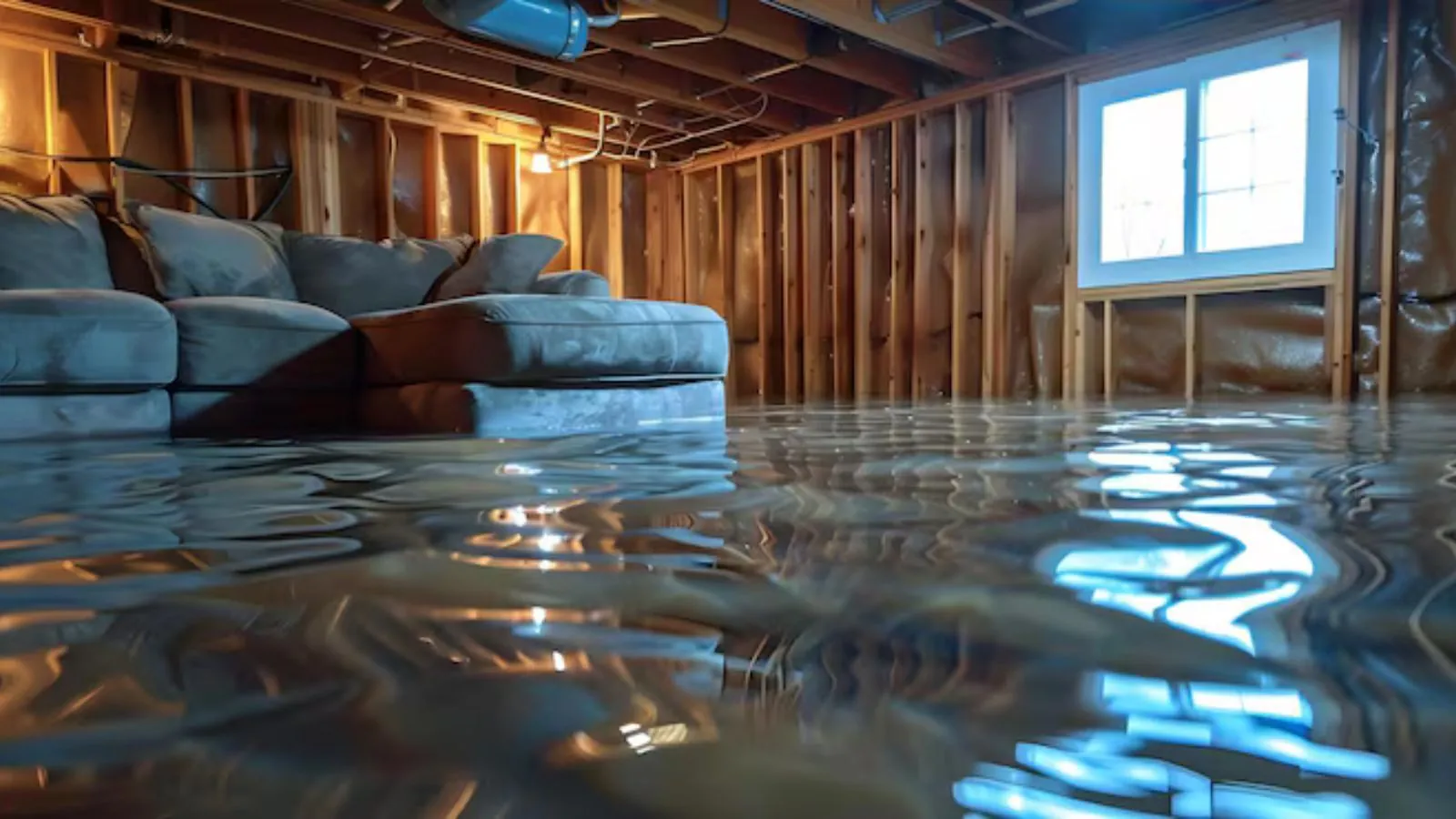
Crawl space water damage in Stoughton often goes unnoticed because the space is dark and rarely visited. If you smell damp air from a floor register or see water at an access hatch, call us to plan a visit. Turn off any sump pump power only if the pump itself is the problem, and avoid entering a space with standing water near wiring.
A wet crawl space affects the floors and air quality of the whole home above.
How water gets into crawl spaces
Groundwater rises after heavy rain, gutters dump water against the foundation, vents let in humid summer air, and plumbing leaks drip onto the soil. Stoughton's brooks and low spots, noted in its hazard mitigation plan, can raise groundwater near some homes.
Exposed soil without a vapor barrier is the most common reason humidity builds up.
What a wet crawl space shows
Check from the access point if you can.
Standing water or damp soil
Anything that stays wet for days needs attention.
Sagging insulation
Wet insulation falls from the joists.
Musty smell upstairs
Air flows from the crawl space into living areas.
Cold or springy floors
Damp joists and subfloor can feel soft.
How we handle the space
The work is mostly water removal, drying and moisture control advice.
Pump out standing water
Small pumps clear water from low areas.
Remove wet insulation
Soaked insulation is bagged and removed.
Dry joists and subfloor
Air movers and dehumidifiers run until readings drop.
Review the source
We explain what we found so you can address drainage.
Drainage, vapor barrier or sealing
Long-term fixes are done by contractors, and we explain the restoration side.
| Fix | Helps with | Trade-off |
|---|---|---|
| Gutter and grading changes | Rain entering at the foundation | Low cost, does not stop groundwater |
| Vapor barrier on soil | Humidity from the ground | Needs clean, dry installation |
| Sump pump and drain | Standing groundwater | Requires power and maintenance |
| Encapsulation | Overall moisture control | Highest cost, most complete |
If water has also reached finished space, see basement water damage cleanup.
What affects the price
Space size, water depth, insulation removal and drying time shape the cost. Access can also matter, since tight spaces slow work. You get the scope and price first.
Insurance basics:
- Flood and groundwater seepage are generally not covered by standard Massachusetts homeowners policies
- A pipe leak into the crawl space is more likely covered
- Sump pump failure may need a separate endorsement
Ask your insurer which sources your policy covers.
Water under the house?
Call the dispatch line and we will plan a visit.
What the Visit Looks Like
Crawl space work is tight and dirty, so the crew arrives with knee pads, lights, a small pump and moisture meters. The first step is a look at the vapor barrier, insulation and any pipes. Photos are taken so you can see what is under your house.
You will hear which fixes the restoration crew handles and which belong to a drainage or foundation contractor.
What to Do Before We Arrive
Keep these steps in mind before a crawl space visit.
- Do not enter if water is near wiring or the space has a strong odor
- Shut off the water supply if a pipe is leaking
- Photograph the access hatch and anything visible from it
- Keep children and pets away from the opening
Crawl spaces in Stoughton homes
Homes with crawl spaces or partial basements are the usual cases. We serve the town and nearby Holbrook and Avon, where Beaver Brook and Trout Brook have FEMA flood profiles.
After drying, moisture control matters. See structural drying and mold remediation if growth is present.
Crawl Space Water Damage questions answered
Deep standing water or water near wiring is. A damp, humid space can wait for a scheduled visit.
A fan alone rarely works. Without dehumidification, moist air just circulates.
They can raise humidity and feed mold on joists and subfloor. Drying early lowers that risk.
Standard policies usually do not. Check your declarations page and ask about endorsements.
A vapor barrier helps, but it should go on a dry space. A contractor can install it after drying.
Yes. We check for standing water, wet insulation and moisture in the joists, then explain what we found and what it would take to fix.