
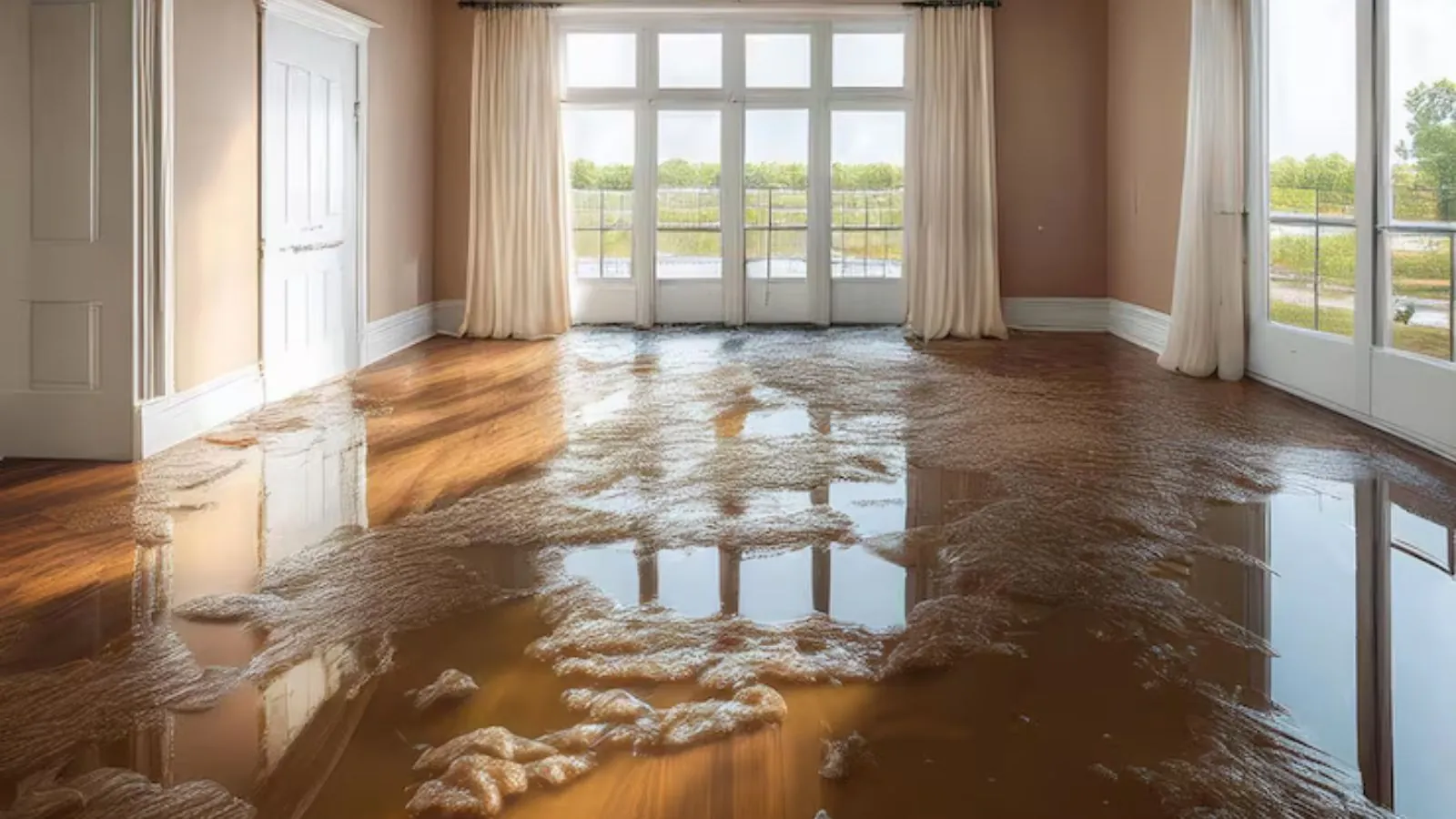
Hardwood floor water damage repair in Stoughton starts with drying, not sanding. Call us to plan a visit. Remove standing water, lift rugs, wipe the surface and keep the floor ventilated. Do not apply heat or force-dry with high heat, which can crack boards.
Wood expands when wet and shrinks when dry. How fast it dries decides whether it recovers.
How floors get wet
Appliance leaks, burst pipes, plumbing under the floor and wet basements all send water into hardwood from above or below. Water from below is harder to notice because the boards cup before they stain.
Engineered hardwood has a plywood core that reacts differently than solid planks.
Signs of water damage in hardwood
Look at the board edges and finish.
Cupping
Edges rise higher than the center when moisture comes from below.
Crowning
The center rises after cupped boards are sanded too early.
Buckling
Boards lift off the subfloor, a sign of severe moisture.
Black or gray stains
Dark staining suggests long-term moisture.
How we dry hardwood
Patience protects the boards.
Measure moisture
Meters check boards and subfloor against a dry reference.
Extract and ventilate
Extractors and air movers remove surface water.
Use drying mats
Mats pull moisture from beneath the boards.
Reassess
After drying, we review what can be sanded or replaced.
Sand, replace boards or replace the floor
Condition after drying decides.
| Condition | Typical repair | Notes |
|---|---|---|
| Mild cupping that flattens | Sand and refinish | Wait until boards are fully dry |
| Few stained boards | Replace those boards | Matching may take blending |
| Widespread buckling | Replace the section | Boards rarely return |
| Engineered wood with swollen layers | Replace | Layers separate |
Wet subfloor beneath may need structural drying.
What affects the price
Floor area, drying days, flooring type and refinishing needs shape the price. We explain the scope for the water work before starting.
Insurance notes:
- Sudden leaks are often covered
- Refinishing may be a separate line item
- Slow leaks are commonly excluded
Ask your insurer whether they cover matching adjacent floors.
Wood floor wet or cupping?
Call the dispatch line and we will plan a visit.
What to Expect When We Visit
A wood floor assessment starts with a moisture meter set for wood, plus readings in the subfloor where access allows. The crew checks the finish, board edges and any gaps, then compares the readings to a dry reference board from the same room.
You will hear whether the floor looks like a drying job, a spot repair or a replacement, along with what could change that verdict once the boards are dry.
Mistakes That Ruin Wet Wood Floors
Heat is the biggest. Heaters, hair dryers and direct sun dry the surface faster than the core, so boards crack and gap. Sanding too early is next, since boards that look flat while still damp will shrink and leave ridges later.
Covering the floor with plastic or rugs is another mistake. Trapped moisture lingers, and stains deepen.
- Lift rugs and mats right away
- Let boards dry gradually with airflow and dehumidification
- Wait for the all-clear before sanding or refinishing
What to Do Before We Arrive
These steps give wood the best chance.
- Remove standing water and lift rugs and mats
- Wipe the surface and let air move across it
- Do not use heaters, hair dryers or high heat
- Do not sand, seal or cover the floor until it is dry
Standards and Sources Behind This Page
The ANSI/IICRC S500 standard for professional water damage restoration treats wood as a material that releases moisture slowly and recommends measuring it against a dry reference. That is why this page asks for readings before any sanding or refinishing decision.
Hardwood floors in Stoughton homes
We serve Stoughton and nearby Holbrook and Avon. Wood floors are common in older New England homes, and the seasonal swing from dry winter heat to humid summers can mask early cupping.
For leaks that start in the kitchen, see kitchen water damage restoration. For carpeted rooms, see carpet water damage restoration.
Hardwood Floor Water Damage questions answered
Often, if drying starts quickly. Severe buckling usually means replacement.
Only after the wood and subfloor read dry. Sanding early can leave the floor crowned.
No. Strong heat can crack boards. Controlled drying with dehumidification is safer.
Yes. Layers can separate when wet, so it is harder to save.
Sudden water damage is often covered. Check your policy for matching rules.
A moisture reading and a look at the board edges give a first answer. The final call comes after drying, since many floors flatten.