
Why Does My House Still Feel Damp Days After the Water Was Cleaned Up?
If a room still smells musty, the baseboard feels cool or your windows fog days after a leak was mopped up, you may need structural drying and dehumidification in Stoughton. Call us to plan a visit. Run the home's own air conditioning on dry mode, keep doors open between rooms, and do not cover wet walls with paint or paneling.
Water hides in framing, subfloor and wall cavities long after the surface looks fine.
Why surfaces dry but structure stays wet
Wood, drywall and concrete absorb water and release it slowly. If humidity stays high, they hold that moisture for weeks. That is why a quick towel dry or a fan in a window rarely finishes the job.
Stoughton's humid summers and cold winters also change how fast materials dry, since cold air holds less moisture and warm air holds more.
Signs a structure is still wet
These are worth a moisture reading.
Persistent musty smell
Odor means moisture is still present somewhere.
Condensation on windows
High indoor humidity is a sign of trapped moisture.
Cool or damp walls
A wall that feels cold to the hand may be holding water.
Warped trim or floors
Swelling and cupping continue until materials are dry.
How controlled drying works
The method is simple but the monitoring matters.
Set a baseline
Meters record readings in wet and unaffected materials for comparison.
Place equipment
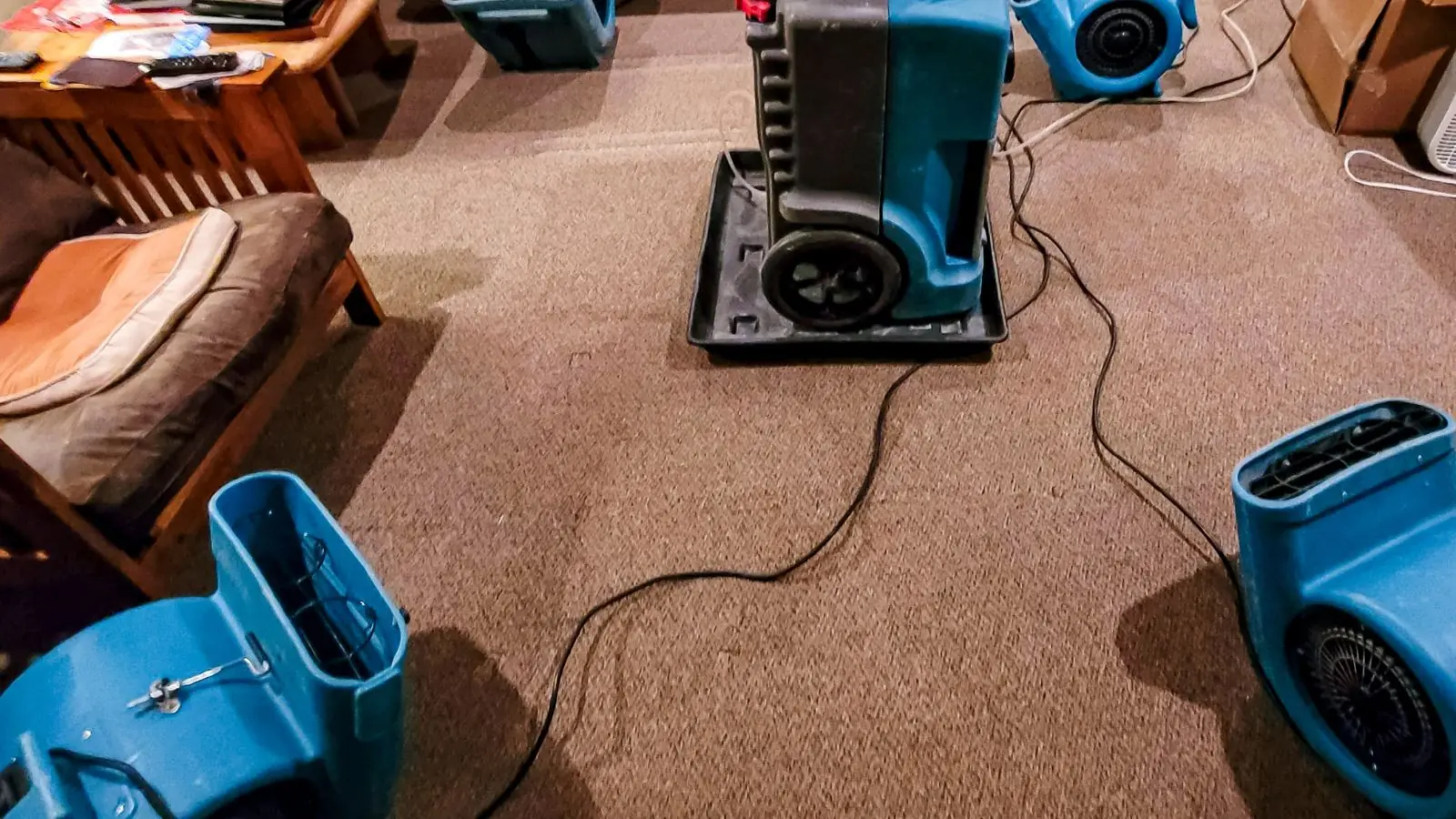
Air movers and dehumidifiers are placed to push dry air through wet areas.
Monitor daily
Readings are checked and equipment is moved as areas dry.
Confirm and remove
Equipment leaves only when materials match dry reference readings.
Dehumidifier types and when they matter
Equipment choice depends on the space.
| Equipment | Best use | Note |
|---|---|---|
| Refrigerant dehumidifier | Typical rooms with moderate humidity | Common and effective in warm rooms |
| Desiccant dehumidifier | Cold spaces such as basements in winter | Works at lower temperatures |
| Air movers | Moving air across wet surfaces | Used with dehumidifiers |
| Drying mats | Wet floors beneath tile or wood | Pulls moisture from below the surface |
Drying usually follows water extraction and may continue into mold remediation if growth has started.
What affects the cost
The number of drying days, amount of equipment and size of the affected area decide the price. You hear the scope and price before work starts.
Insurance basics:
- Drying is usually included in a covered water loss
- Documentation of daily readings supports your claim
- Ask your insurer about equipment rental days they cover
Daily readings also prove the structure is truly dry.
House still feels damp?
Call the dispatch line and we will plan a visit.
What the Daily Check Looks Like
Each day a technician returns with the same meters and records readings in the same spots. Numbers that fall confirm that the setup is working. Numbers that stall mean equipment gets moved or added.
You get a simple log. Drying is finished when every tracked spot reaches the dry standard set at the start, not when a certain number of days has passed.
What to Do While Drying Is Underway
These steps help equipment do its job.
- Keep doors and windows in the drying area closed
- Leave equipment running and do not unplug it to save power
- Do not paint or cover walls until readings are normal
- Tell the crew lead about any new smells or stains
Drying homes across Stoughton
Our crews bring equipment to Stoughton and nearby Avon and Holbrook. We pair drying with basement cleanup after rain and with burst pipe work in winter.
For wet walls, see wall and drywall water damage repair.
Structural Drying questions answered
Water can remain in insulation and framing. A moisture reading tells you if it is still wet inside.
High indoor humidity from wet materials causes condensation. A dehumidifier lowers it.
Commonly several days. Readings decide when it is complete.
For small spills, yes. For larger losses, commercial equipment dries faster and more evenly.
Fast, thorough drying reduces the risk, but it does not remove growth that has already started.
We do not offer rentals. Drying equipment is placed and monitored by our crew so readings drive when it comes out.