
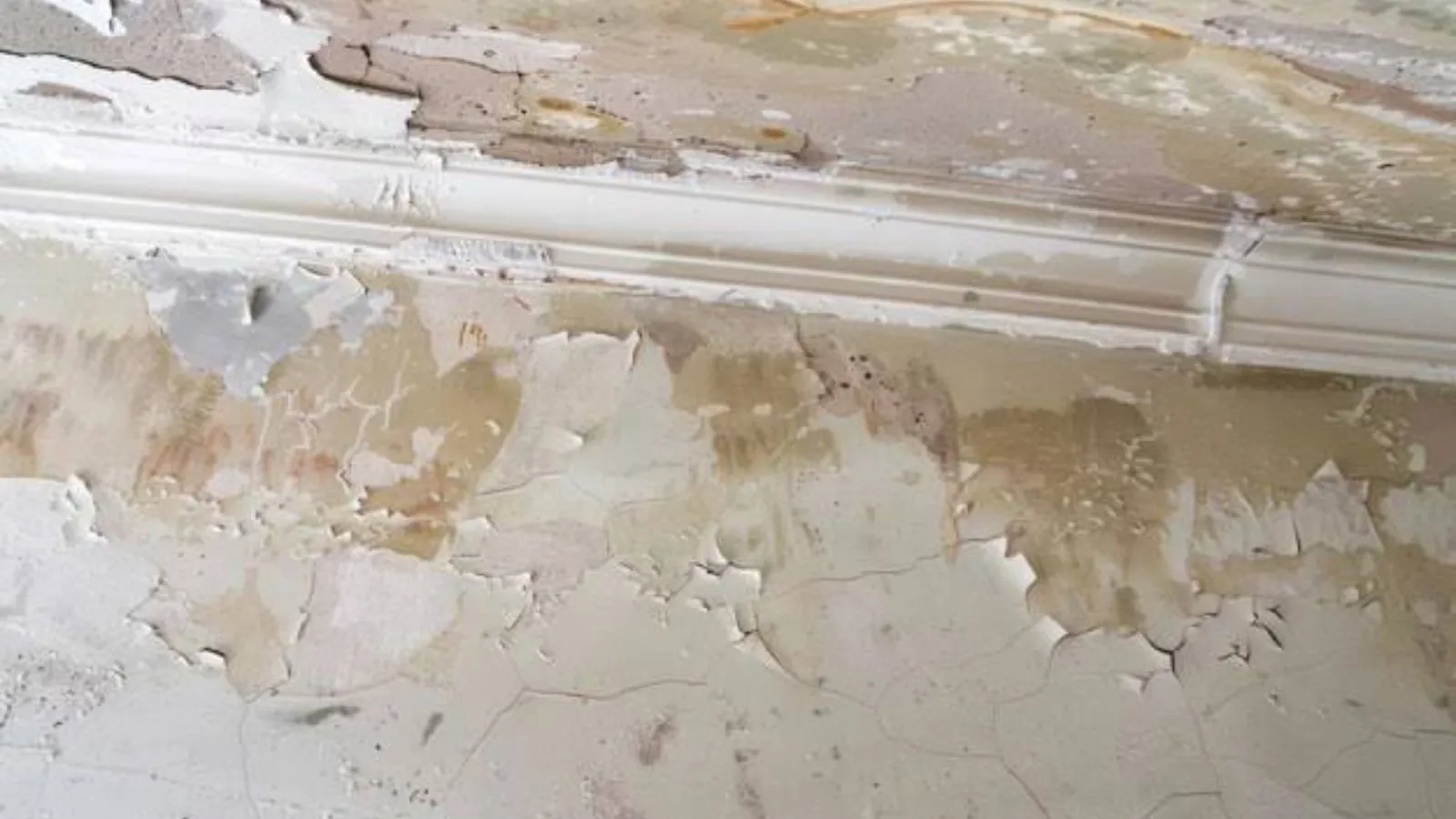
Wall and drywall water damage repair in Stoughton begins with finding how far the moisture goes. Call us to plan a visit. Turn off the water source, remove baseboards if you can do it safely, and keep furniture away from the wall. Do not paint over stains, which traps moisture.
Drywall is mostly paper and gypsum, and both hold water.
How walls get wet
Plumbing in walls, roof leaks, window leaks, and flooding from below all feed moisture into drywall. Water wicks upward in drywall about as far as it is wet at the base.
Insulation in the cavity can hold water against framing even after the drywall surface looks dry.
Signs of wet drywall
Check the lower wall and corners first.
Stains or tide marks
Rings show repeated wetting.
Soft or crumbling drywall
Pressing gently reveals soft areas.
Peeling paint or tape
Moisture breaks the bond.
Musty smell near baseboard
Odor often precedes visible mold.
How we repair wet walls
Open only what needs to be opened.
Measure the cavity
Meters and thermal imaging show where moisture is.
Remove what cannot be dried
Saturated drywall and insulation are cut out.
Dry framing and cavity
Air movers and dehumidifiers dry the space.
Prepare for repair
Edges are cut clean for patching.
Dry in place or cut out
Cavity conditions decide.
| Condition | Typical choice | Reason |
|---|---|---|
| Wet for under a day, clean water | Dry in place | Drilled access can reach the cavity |
| Soft or sagging drywall | Cut out | Strength is lost |
| Wet insulation | Remove | Holds water against studs |
| Mold on the surface | See mold remediation | Growth changes the plan |
For wet ceilings, see ceiling water damage repair.
What drives cost
Wall area, insulation, drying time and access determine price. We explain scope before work begins.
Insurance notes:
- Sudden water damage is often covered
- Painting and finishing may be separate
- Gradual leaks may be excluded
Keep before and after photos for your insurer.
Wall wet or stained?
Call the dispatch line and we will plan a visit.
What to Expect During Wall Work
The crew starts with readings at several heights, because moisture wicks upward and the visible stain is only part of the story. A thermal camera helps find cold, wet spots behind the paint. You are shown the readings and the proposed cuts before any drywall is removed.
Cuts are made in straight lines about a foot above the highest reading, so patching is simpler later. Wet insulation is pulled and bagged, and the stud bay is left open to dry.
Mistakes That Hide Wall Problems
Painting over a stain is the most common one, followed by caulking a gap and calling it fixed. Stain-blocking paint can seal moisture into the wall, where it keeps feeding mold. Skipping the insulation is another trap, since wet insulation holds water against studs for weeks.
Closing the wall too soon is the third. Framing should read dry before new drywall goes up.
- Do not paint a wall until readings are normal
- Replace wet insulation, not just the drywall
- Keep the removed drywall pieces for your adjuster if asked
After the Wall Is Dry
When framing reads dry, a contractor can patch drywall, prime and paint. Ask for mold-resistant board in damp areas. Fix the original source first, or the new wall will face the same problem.
Standards and Sources Behind This Page
The ANSI/IICRC S500 standard for professional water damage restoration describes how to decide between drying drywall in place and removing it, based on the water category and how long materials stayed wet. The EPA guide to mold and moisture adds that wet building materials should be dried within a day or two to prevent mold.
Wall repair in the Stoughton area
We serve Stoughton and nearby Avon and Holbrook. After a flood or burst pipe, walls are among the first things we check.
See structural drying for how we confirm the wall is dry before closing. Related jobs include burst pipe water damage.
Wall and Drywall Water Damage questions answered
Sometimes, if it was wet briefly with clean water. Soft or sagging drywall is removed.
Only after the wall is dry and the source is fixed. Otherwise the stain returns.
Water wicks upward, so measure above the visible line.
Wet insulation is usually removed because it holds water.
Sudden leaks are often covered. Check your policy.
Yes. A moisture meter and thermal camera show wetness inside the wall without opening it, and we explain what to do next.