
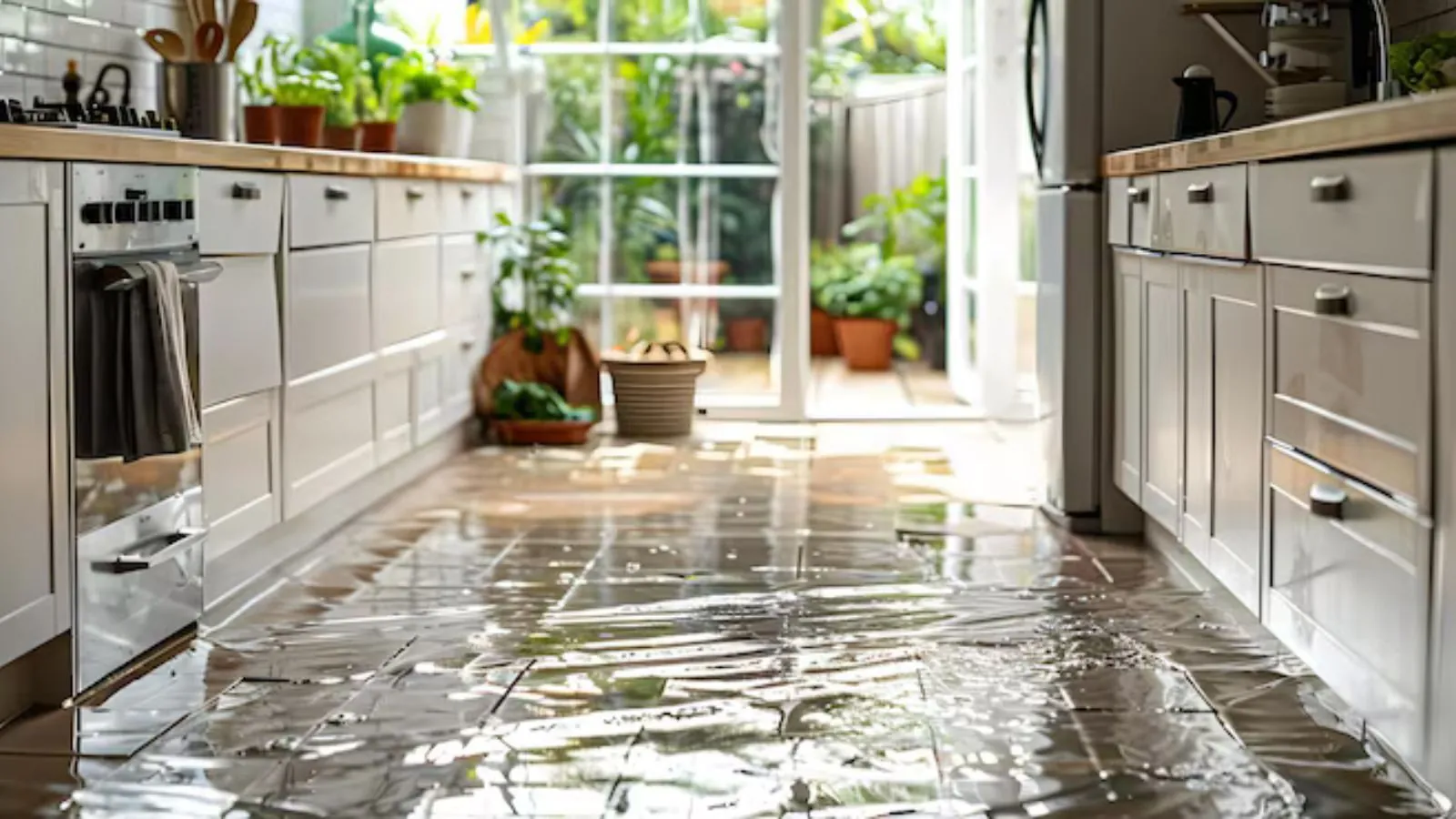
Kitchen water damage restoration in Stoughton often involves several materials at once, including cabinets, flooring, drywall and sometimes the ceiling below. Call us to plan a visit. Shut off the supply valve under the sink, empty the cabinet base, and photograph the damage before cleanup.
Kitchens are crowded with pipes and appliances, so one small leak can touch several systems.
Where kitchen leaks start
Under-sink supply lines, dishwasher connections, refrigerator ice maker lines and slow faucet drips are the most common. Dishwasher leaks are especially sneaky, since they run behind the toe kick and soak the subfloor.
Cabinets made of particleboard swell and deteriorate quickly once wet.
What to look for
Kitchens show wet damage in a few places.
Swollen cabinet base
Particleboard bottoms bulge when wet.
Floor soft near the sink
Subfloor may be saturated.
Musty smell under the sink
Damp cabinets smell stale.
Water stains on the ceiling below
A second floor kitchen leak shows below.
How we dry a kitchen
The work targets cabinets, floors and walls together.
Find all wet areas
Meters map the cabinets, floor and wall.
Remove water
Extractors clear any standing water.
Open access
Toe kicks and cabinet backs are opened so air reaches the cavity.
Dry and verify
Equipment runs until readings are normal.
Dry cabinets or replace them
Cabinet material decides.
| Cabinet type | Likely outcome | Reason |
|---|---|---|
| Solid wood | Often dried and kept | Wood tolerates controlled drying |
| Plywood box | Case by case | Edges may swell |
| Particleboard | Often replaced | Swells and loses strength |
| Laminate counter over wet base | Often kept, base replaced | Counter surface usually survives |
For appliance related leaks, see appliance leak water damage.
What shapes the price
Cabinet count, flooring type, wetted area and drying time all matter. Scope and price are explained before work starts.
Insurance notes:
- Sudden leaks are often covered
- Slow leaks may be excluded
- Keep receipts for plumbing repairs
Your insurer may ask for a plumber's note on the cause.
Leak under the sink?
Call the dispatch line and we will plan a visit.
What a Kitchen Visit Involves
A kitchen assessment begins at the source. The technician checks under the sink, behind the dishwasher and around the refrigerator, then moves outward to the toe kicks, the base of the island and the floor. Readings are taken in each spot and noted on a simple sketch.
Because cabinets are expensive, the crew explains which ones can be dried in place and which are likely to fail. You see the readings, and the plan is explained before anything is removed.
Mistakes That Make Kitchen Leaks Worse
Closing the toe kick again after wiping up is the classic error. It traps water against the cabinet base, where particleboard swells and mold can start. Another is ignoring the ceiling below a second floor kitchen until a stain appears.
A third is replacing the countertop first. Until the cabinet base is dry, a new counter simply sits on a wet box.
- Open the toe kick to let air reach the base
- Check the room under the kitchen for stains
- Keep appliance receipts and photos of the leak for your insurer
After the Kitchen Is Dry
When readings are normal, you can plan repairs. Replace damaged cabinets, seal around the sink and check supply lines. A plumber can add shutoff valves or replace aging hoses. Keep drying records so the contractor knows the cabinet bases are ready.
Why Kitchens Need Careful Sequencing
Kitchens pack plumbing, appliances, cabinets and flooring into a small space, so the order of work matters. A crew that rushes to remove one material before measuring the others can miss a wet subfloor. That hidden moisture later grows mold or cups new flooring.
What to Do Before We Arrive
A few steps protect cabinets and floors while you wait for a visit.
- Close the supply valve under the sink or behind the appliance
- Empty the cabinet base and wipe it dry
- Open the toe kick if you can do so without tools
- Photograph the damage and the source
Standards and Sources Behind This Page
The ANSI/IICRC S500 standard for professional water damage restoration describes how materials such as cabinet boxes, subfloor and drywall should be measured and dried. The Massachusetts Division of Insurance notes that sudden and accidental losses are commonly covered, while gradual leaks often are not.
Kitchen leaks in Stoughton homes
We serve Stoughton and nearby Avon and Holbrook. After kitchen drying, flooring questions often lead to hardwood floor repair or drywall repair.
See structural drying for how we confirm the space is dry.
Kitchen Water Damage questions answered
Solid wood often can. Particleboard usually cannot once it swells.
A moisture meter shows it. Soft or springy flooring is a clue.
If you cannot isolate the leak, yes. Otherwise close the valve at the fixture.
Sudden leaks are often covered. Slow leaks may not be.
Several days. Readings decide the end.
Yes. We open the toe kick or cabinet base with permission, take readings and explain what is wet.