
Hidden leaks are expensive because they run for weeks before anyone sees them. The good news is that most can be narrowed down with a few simple checks, no special tools required. This guide walks through them in order, from cheapest to most involved.
If you find active water, shut off the supply and call for help rather than continuing to investigate.
Start with the water meter
Turn off every faucet, appliance and ice maker. Find the water meter, usually in the basement or an outdoor pit, and look at the low-flow indicator, often a small triangle or dial. If it moves with everything off, water is leaking somewhere downstream of the meter.
Write down the reading, wait an hour without using water, and check again. A changed number confirms a leak.
Check the toilets and fixtures
The most common hidden leak is a toilet that runs silently into the bowl. Put a few drops of food coloring in the tank, wait fifteen minutes without flushing and see whether color appears in the bowl. Check under sinks, behind the washer and around the water heater for dampness.
Look for signs on walls, ceilings and floors
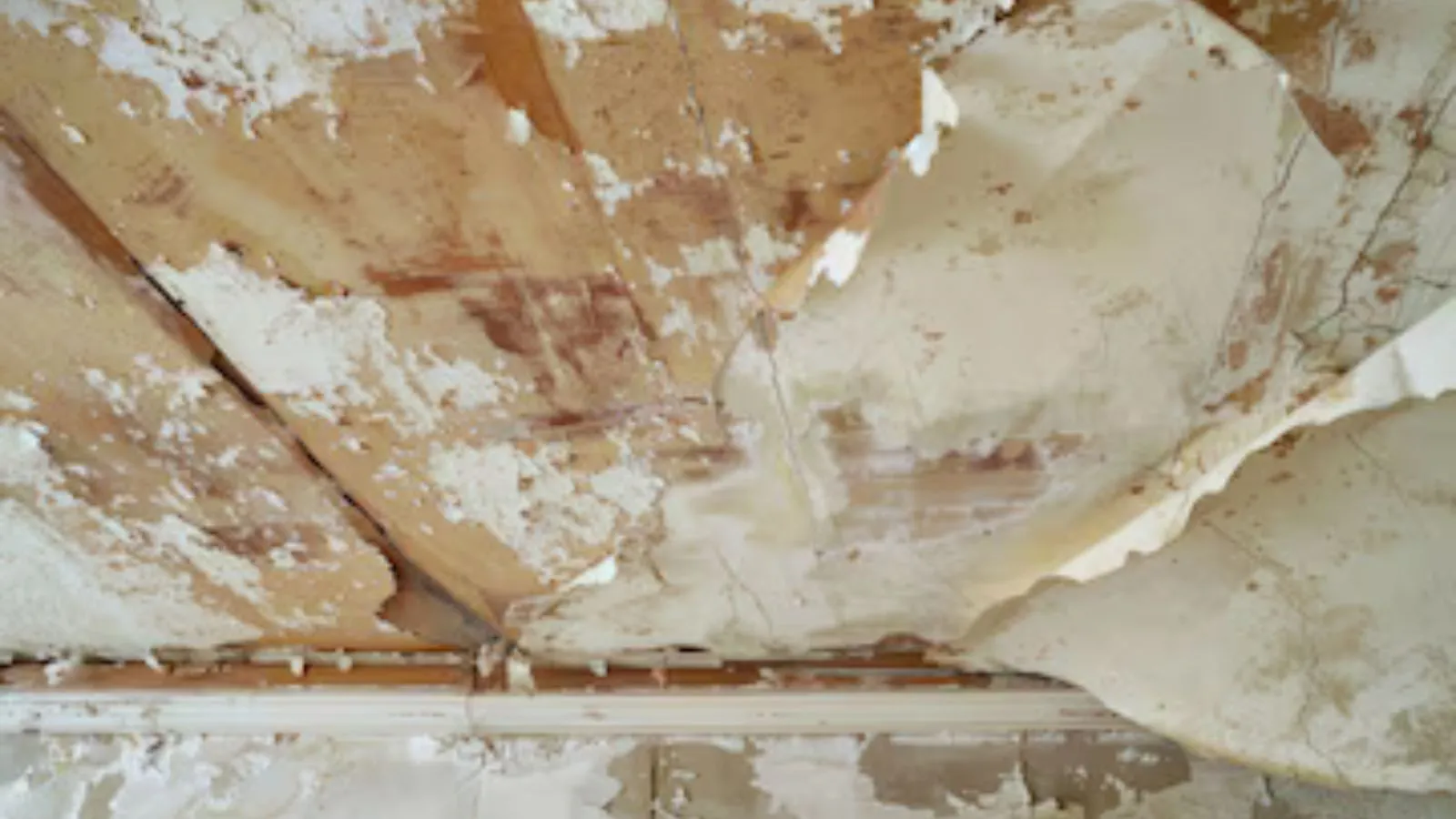
Stains, bubbling paint, warped baseboards and cool, soft spots can all mark a hidden leak. Water travels, so the damp spot is not always above the source. Look along the path pipes follow, and check the floor below any stain.
A thermal camera or moisture meter makes this faster and more accurate.
| Clue | What it may mean | First check |
|---|---|---|
| Meter moves with all off | Leak between meter and house | Walk the line, check the yard |
| Toilet colors the bowl | Flapper leak | Replace the flapper |
| Stain on ceiling | Pipe or roof leak above | Check the room above |
| Warm spot on floor | Hot line leak under slab | Call a plumber |
| Musty smell | Hidden dampness | Moisture readings |
When to bring in a pro
If you suspect a leak inside a wall or beneath a slab, a plumber or leak detection specialist can pinpoint it without tearing things open. A restoration crew can then map the water that already escaped, since the leak and the damage are two separate problems.
Low-tech tests you can repeat
Besides the meter test, you can press a dry paper towel against suspect spots and see whether it comes away damp. You can place a small mirror under a pipe and check for fogging. You can listen at walls and floors in a quiet house for the sound of running water.
Repeat the same test at the same time of day so your results are comparable.
What leak detection professionals add
Professional tools include acoustic listening devices, thermal cameras and tracer gas systems that can find a leak without opening a wall. These tools save money when the pipe is under a slab or behind finished walls.
Once the leak is found and repaired, a restoration crew maps the water that already escaped and dries it.
After you find the leak
Shut off the water to that fixture, or the whole house if you cannot isolate it. Photograph the leak and the damage. Call a plumber for the repair, and call a restoration crew if water has reached walls, floors or ceilings.
Ask the plumber to note the cause and the date. That note can help with an insurance claim.
- Shut off the water
- Photograph the source and the damage
- Call a plumber for the repair
- Call a restoration crew for the damage
How long a hidden leak can run before it shows
Slow leaks can run for weeks or months before stains appear, because materials absorb water first. A pinhole leak in a pressurized line can release many gallons a day. A leaking toilet flapper can waste thousands of gallons a month without any visible water.
This is why a rising water bill is worth investigating even when the house looks dry.
Warning signs outdoors
Check the yard for unusually green or soggy patches along the line from the street to the house. Look at the foundation for dampness and the meter pit for standing water. A hissing sound at an outside spigot or a pool near the curb stop may indicate a service line leak.
Service line leaks are often the responsibility of the homeowner, so a plumber can advise on repair options.
What to Do the Moment You Suspect a Leak
Move in this order, and stop as soon as you find water.
- Shut off every fixture and check the meter
- Do not open walls or cut into slabs yourself
- Photograph stains, wet spots and the meter reading
- Call a plumber for the pipe and a restoration crew for the water
Standards and Sources Behind This Page
Water utilities and plumbers use the meter test described here as a standard first step. Massachusetts licenses plumbers through the Board of State Examiners of Plumbers and Gas Fitters, and the EPA WaterSense program publishes guidance on finding household leaks, including the food coloring toilet test.
Where hidden leaks tend to show up in Stoughton
Finished basements and second floor laundry closets hide leaks easily. In winter, cracked exterior wall lines can leak after a thaw, which is a pattern seen after the January 2015 and January 2022 cold snaps. Slab leaks can show up as warm floor spots in homes with radiant heat.
If you find damage, our pages on slab leak water damage and appliance leak water damage explain what comes next. We cover Holbrook and Avon too.
Common questions
Turn everything off, note the reading and check again after an hour. A change means a leak.
Often. Moisture meters and thermal cameras show wet areas without opening the wall.
A hidden leak is a common cause, so start with the meter test.
Exterior wall supply lines and attic runs can crack in freezing weather and leak after thaw.
Often the homeowner is responsible for the service line on their property. Ask your water department and a plumber to confirm.