
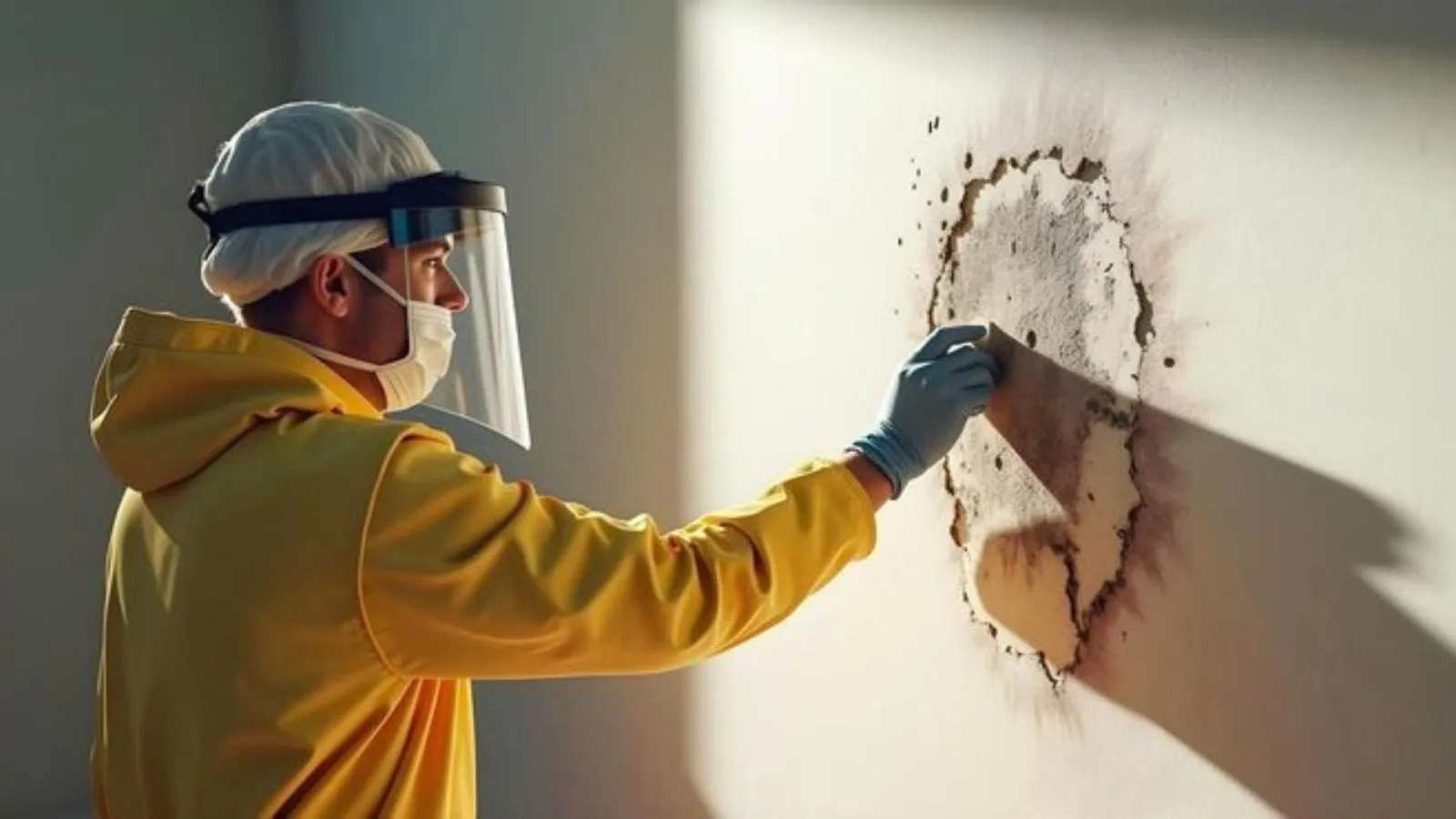
Small wall mold is a common homeowner problem, and the internet is full of confident advice. The honest answer is that some jobs are reasonable to do yourself and others are not. The deciding factors are size, material and the cause.
This guide is general information. If anyone in your home has breathing problems, talk to a doctor before cleaning.
What counts as a small job
A spot of surface mold on a hard, painted, non-porous wall in a bathroom is typically manageable. Public mold guidance for homeowners treats small areas differently from large ones, and EPA guidance suggests that patches larger than about 10 square feet, roughly a three-foot square, deserve professional help.
If mold covers more than a small patch, returns after cleaning or sits on soft materials, bring in a pro.
What to wear and how to work
Wear an N95 respirator, gloves and eye protection. Keep the area closed off, dampen the surface lightly so spores do not fly and avoid dry scrubbing. Bag debris and take it out of the house. Do not mix cleaning products, which can create toxic fumes.
What not to DIY
Drywall with mold is porous. Spores grow inside, and surface cleaning rarely gets all of it. Insulation, carpet and ceiling tile follow the same rule. If the mold is behind a wall or came from a long-term leak, removal is usually a bigger job than it looks.
| Situation | DIY? | Reason |
|---|---|---|
| Small spot on painted tile or glass | Often yes | Non-porous, easy to clean |
| Small spot on painted drywall, no leak | Maybe | Fix moisture first, watch for return |
| Drywall that is soft or stained | No | Replace the affected section |
| Large area or HVAC involved | No | Spread risk, needs containment |
| Mold after sewage or floodwater | No | Contamination needs protocol |
A safe working routine for small jobs
Close the room's door and set a box fan in the window blowing outward if you can do so without pushing air into other rooms. Mist the moldy surface lightly so spores stay down. Wipe with a damp cloth and detergent, and bag the cloth right away. Wash your hands and clothes when you finish.
Then watch the spot for two weeks. If it returns, the moisture is still there or the mold was deeper than it looked.
Signs the job is bigger than it looks
Several signs say stop. The wall feels soft, paint bubbles in a larger area, a musty smell persists after cleaning or you see mold in more than one room. Health symptoms, such as coughing or irritated eyes, that improve when you leave the room also deserve a call to a doctor.
At that point an assessment is the right next step, because the question is no longer cleaning but cause.
Where wall mold hides in a typical home
Bathrooms are the obvious place, especially the corner where a shower wall meets the ceiling. Exterior corners of bedrooms, the wall behind a bed pushed against an outside wall and closets that lack airflow are the next most common. Basement walls that touch bare concrete also collect moisture.
Look behind furniture and inside closets once a season. Catching a spot early is the difference between a cloth wipe and a wall repair.
Preventing a repeat after cleaning
Keep indoor humidity under about half by running exhaust fans during showers and using a dehumidifier in damp rooms. Fix drips right away, keep gutters clear and leave a few inches of space between furniture and exterior walls.
A cheap hygrometer shows the humidity level so you are not guessing.
What the cleanup should leave behind
After a good cleaning, the surface looks and smells clean and stays that way for weeks. There is no new staining, no new odor and no softening of the wall. If you are unsure, check again after a few days of warm, humid weather, when mold usually returns if the moisture is still present.
If anything comes back, treat it as a sign that the problem is bigger than a wipe, and stop cleaning.
Tools and supplies for a small cleanup
Gather an N95 respirator, nitrile gloves, goggles, heavy trash bags, a spray bottle, a stiff cloth, a bucket and a mild detergent. Skip abrasive scrubbing that throws spores into the air. Wash tools in hot water afterward and let them dry outdoors if possible.
Keep children and pets out of the room until the surface is dry and the smell has cleared.
Standards and Sources Behind This Page
The cleaning steps here follow EPA guidance in A Brief Guide to Mold, Moisture, and Your Home, which says to fix moisture first and that small patches may be handled by the homeowner. The ANSI/IICRC S520 standard for professional mold remediation covers larger jobs.
What to Do Before You Start Cleaning
Take these steps first.
- Decide whether the area is under about 10 square feet
- Fix the moisture source before cleaning
- Wear an N95 respirator, gloves and eye protection
- Do not mix cleaning products and do not dry scrub
Wall mold in Stoughton homes
Stoughton bathrooms and basements see seasonal swings, with damp summers and tight heated winters that push moisture into corners. Massachusetts issues no mold remediation license, so ask any contractor for references and, for home improvement work on an owner-occupied home, a registration number from the state.
If cleaning does not hold, see our page on mold remediation and the wall repair details at wall and drywall water damage repair. We also serve Avon and Holbrook.
Common questions
Surface spots on sealed paint may be cleanable. Mold in the drywall itself usually means replacing the section.
An N95 respirator, gloves and eye protection at minimum. Keep other people out of the room.
No. There is no state mold remediation license, so ask for references and a written scope.
The moisture source is still there. Cleaning without fixing the leak or humidity rarely lasts.
Only after it is completely dry and the moisture source is fixed. A mold-resistant primer can help, but it does not replace dry conditions.