
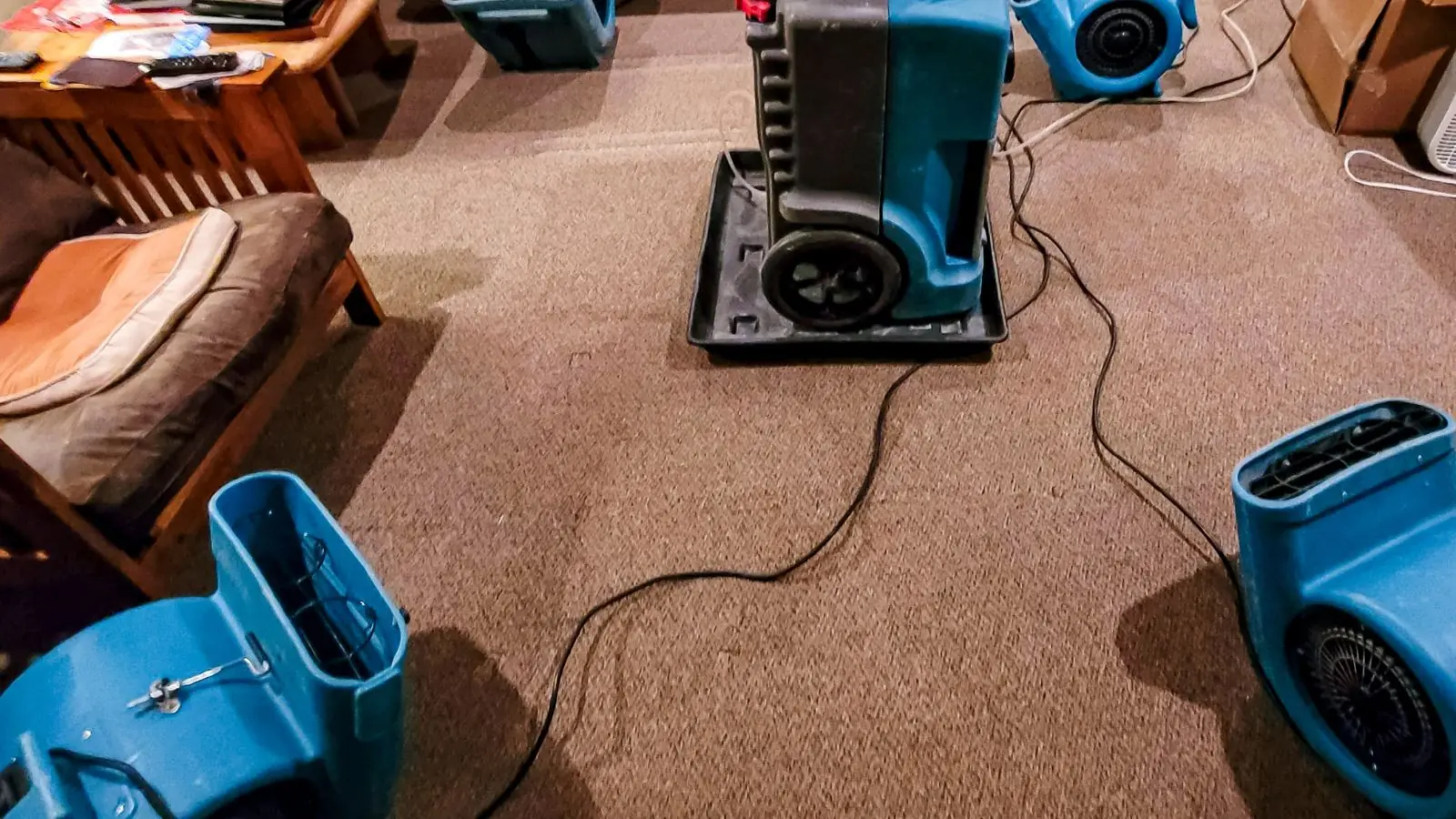
Water mitigation is the first phase of dealing with a water loss. It focuses on limiting damage, not on rebuilding. The goal is to stop further spread, remove what water can be removed and dry what is left so the building does not rot or grow mold.
Knowing the phases helps you judge whether a crew is doing the work in the right order.
Phase one: stop the source and make it safe
Nothing else works while water is still arriving. The crew confirms supply is off or that rain or groundwater is the cause, and checks electrical and structural hazards. If sewage or river water is involved, protective procedures start here.
You can help before anyone arrives by closing the shutoff and staying out of water near outlets.
Phase two: extraction
Extraction removes bulk water with pumps and extractors. Done well, it takes out gallons that would otherwise take drying equipment days to handle. Carpet, pad and hard floors are all extracted, and this is where a water extraction page like our water extraction service fits.
Extraction is not drying. A floor can look clear and still be wet below.
Phase three: drying and monitoring
Drying uses air movers to push air across surfaces and dehumidifiers to pull moisture from the air. Readings are taken at the start and daily after that, so the crew can see whether materials are drying and move equipment to areas that lag.
Equipment comes out only when readings match dry reference materials.
| Phase | Main tools | What proves it worked |
|---|---|---|
| Stop the source | Shutoffs, meters | No new water arriving |
| Extraction | Pumps, extractors | No standing water |
| Drying | Air movers, dehumidifiers | Daily readings falling |
| Documentation | Photos, logs | A written record for your insurer |
Phase four: documentation and handoff
Photos, moisture logs and a written scope go to you at the end. They support an insurance claim and give a contractor a starting point for repair. Mitigation is not the same as repair, and the plan for rebuilding comes after drying.
What the equipment is actually doing
Air movers do not dry water. They speed evaporation by moving air across wet surfaces. Dehumidifiers pull the moisture out of the air so evaporation can continue. Without a dehumidifier, the room fills with humid air and drying slows or stops.
Thermal cameras and moisture meters play a different role. They tell the crew where to place equipment and whether it is working, so nothing is guesswork.
- Air movers raise evaporation
- Dehumidifiers remove the moisture
- Meters confirm progress
- Thermal cameras locate hidden wet spots
How long each phase usually lasts
Stopping the source takes minutes if you can reach the valve. Extraction runs from an hour to a full day depending on the volume of water. Drying commonly takes several days, and heavier materials such as framing or concrete can take longer.
Documentation happens throughout, with a final package at the end. Rebuilding is a separate project, and its timeline depends on contractors and materials.
What you can do while the crew works
Stay out of the drying area unless the crew lead says otherwise. Keep doors and windows in the affected rooms closed, because open windows let humid air back in and slow dehumidifiers. Keep pets and children away from cords and moving equipment.
Leave the equipment running even if it is loud. Turning it off to sleep, then forgetting to turn it back on, is one of the most common reasons drying takes longer than planned.
Signs the mitigation is not working
Watch for a smell that gets stronger, readings that stop falling for two days in a row, condensation on windows in the drying room or equipment that has not moved since day one. Any of these means the setup needs adjusting.
Ask the crew lead to show you the readings log. A good crew is happy to explain it, because the numbers are the proof that the work is on track.
- Readings stalled for two days
- Condensation on windows
- A stronger musty smell
- Equipment that never moves
Mitigation versus waiting for the adjuster
Many homeowners wait for an adjuster before doing anything, and that delay can turn a small loss into a large one. Most policies require you to take reasonable steps to prevent further damage, and mitigation is exactly that. Document first, then begin.
Keep the removed materials or photographs of them, because the adjuster may want to see what was taken out and why.
Standards and Sources Behind This Page
The phases described here follow the ANSI/IICRC S500 standard for professional water damage restoration, which covers water categories, drying classes, equipment placement and monitoring. Insurance points follow the Massachusetts Division of Insurance.
What to Do While Mitigation Is Underway
Help the crew by following these steps.
- Keep doors and windows in the drying rooms closed
- Leave equipment running and do not unplug it
- Do not walk on wet floors or lift flooring yourself
- Ask for the readings log each day
Mitigation in Stoughton
Stoughton's water events come in several forms. The town saw flooding on March 29, 2010, a rainfall event on July 6, 2018 and a flash flood on June 28, 2020, plus winter freezes. Each type changes the tools: pumps for flooded basements, thermal imaging for pipe leaks, desiccant dehumidifiers for cold winter spaces.
For the drying phase in detail, read structural drying. Neighbors in Brockton and East Walpole get the same sequence.
Common questions
Extraction can finish in hours. Drying commonly takes several days, and readings decide the end.
Mitigation limits damage and dries the building. Restoration or repair rebuilds what was removed.
They show whether materials are actually drying and where equipment should move.
Winter freezes, heavy rain flooding such as March 2010 and flash floods such as June 2020, according to local records.
Usually yes, and most policies expect it. Photograph the damage first and keep records of what is removed.