
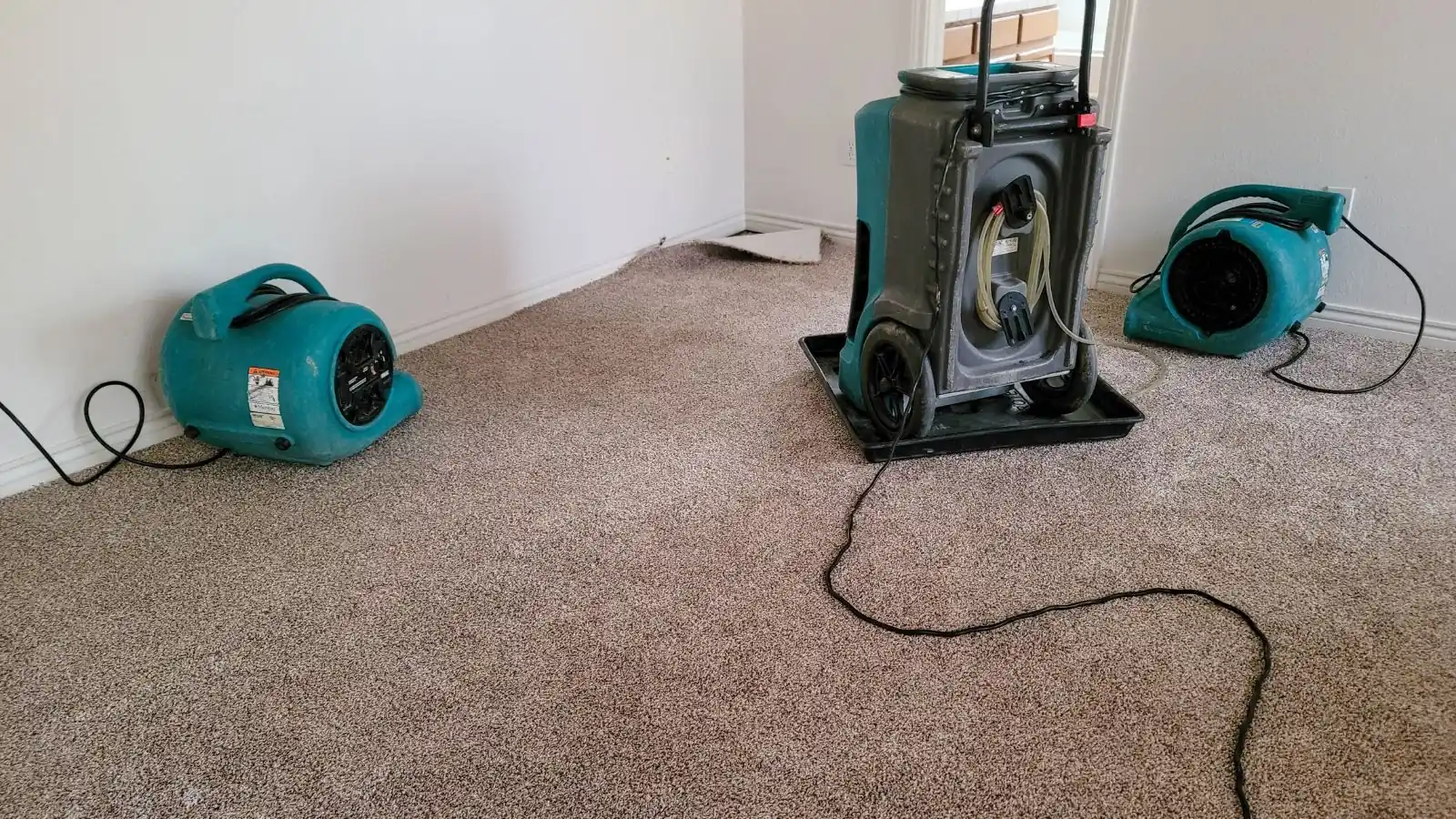
Plenty of small leaks can be dried by a homeowner. The trick is knowing where the line is. Dry the wrong thing yourself and you may be hiding a bigger problem under a floor or behind a wall.
This guide separates the jobs you can reasonably handle from the ones that call for equipment and experience.
Jobs you can dry yourself
A small spill on a hard floor, a few drops from a faucet, a towel's worth of water from a window leak or a damp rug can all be handled with towels, a wet-dry vacuum and a fan. Act within a day, open windows if the air is dry and check again after 24 hours.
Jobs that need a professional
Large amounts of water, anything that soaked into carpet pad, drywall or insulation, water that sat for more than a day and any contaminated water need professional help. So does water that came from a pipe inside a wall.
| Situation | DIY or pro? | Reason |
|---|---|---|
| Small spill on tile | DIY | Easy to reach, easy to dry |
| Wet rug on hardwood | DIY, quickly | Wood may cup if left |
| Carpet soaked through | Pro | Pad holds water |
| Water inside a wall | Pro | Hidden moisture |
| Sewage or floodwater | Pro | Contamination |
| Anything over 24 hours old | Pro | Mold risk rises |
How to tell if you got it dry
Surfaces that feel dry can still be wet below. A moisture meter shows what the eye misses. If a smell lingers, baseboards feel cool or paint blisters later, there is probably still moisture somewhere.
What not to do
Do not use space heaters to rush drying, which can warp floors. Do not paint over a wet wall. Do not run household vacuums on wet floors near outlets.
A day-by-day plan for a small spill
On day one, remove standing water, lift items off the floor and start airflow. On day two, check the area with your hand and, if possible, a moisture meter. On day three, if it still feels cool or damp, call a professional rather than waiting.
That timeline matters because mold can start in a damp space within a couple of days.
Hidden problems small spills can leave
Water that seems minor can run under baseboards, into cabinets and beneath flooring. You may not see a problem until odors, stains or warped boards show up weeks later. If you cannot say exactly where the water went, a reading is worth the call.
Tools worth owning
A wet-dry vacuum, a few box fans, a basic moisture meter and a dehumidifier cover most small jobs. A meter shows whether a wall is wet inside, so you stop guessing. Keep towels, a mop and heavy-duty bags in one place so you can move fast.
None of these replaces professional equipment for a large loss, but they make small ones much easier.
Signs the DIY dry out is failing
A musty smell after two days, baseboards that feel cool, paint that bubbles or a floor that cups all say there is still water somewhere. So does a stain that grows after it seemed to stop.
When any of those appear, stop spending time on fans and call someone with meters and a thermal camera.
- Smell that does not clear
- Cool baseboards
- Blistering paint
- A stain that keeps growing
Basements, bathrooms and bedrooms
Basements are the hardest to dry yourself because concrete holds water and cool air slows evaporation. Bathrooms dry faster but hide water behind tubs and under vanities. Bedrooms usually involve carpet, so the pad decides the outcome. Match your approach to the room.
When in doubt, check the corners and the edges, where moisture lingers.
Getting help without panic
If you are unsure, call and describe what you see. A dispatcher can ask a few questions and tell you whether a visit is worth it. Many homeowners wait too long because they do not want to overreact. A quick call costs nothing and can save a wall.
Standards and Sources Behind This Page
The advice on drying times follows the ANSI/IICRC S500 standard for professional water damage restoration and EPA guidance on moisture and mold, both of which stress removing water within a day or two. The EPA also suggests keeping indoor humidity between 30 and 60 percent.
DIY drying in Stoughton homes
Stoughton's seasons matter. Humid summers slow drying, and winter heat can dry the air too fast for hardwood. A quick spill in a finished basement may seem minor, but concrete and carpet pad hold moisture. The town's low spots near Steep Hill Brook and the West Street culvert also see water reach basements after storms.
For the professional side, read carpet water damage restoration and hardwood floor water damage repair. We serve Holbrook and Avon.
Common questions
If the water is more than a spill or it has been more than a day, call.
For small spills, yes. Larger losses need commercial equipment.
Not if the pad is wet. Pad holds water that a fan will not reach.
Low spots near the town's brooks and culverts can bring repeat moisture, so check for the source too.
A moisture meter reading near the level of an unaffected area is the best sign. Smell and touch alone can miss damp spots.